Lalique crystal: when matter becomes an Art Deco work of art
🚀 Key Takeaways
- Core concept : René Lalique transformed glass and crystal into expressive, reproducible art.
- Practical tip : Look for the Lalique signature (R. Lalique, Lalique France) and museum provenance when buying.
- Did you know : The Musée Lalique in Wingen-sur-Moder preserves both workshops and masterpieces of the house.
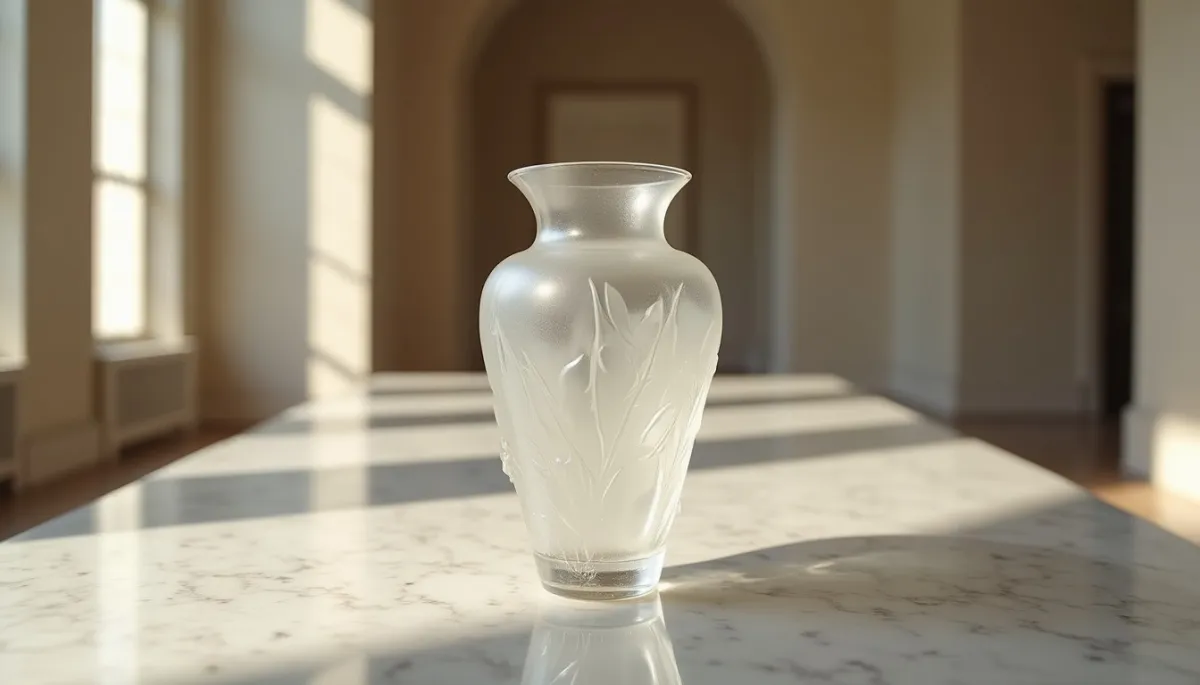
Light that seems carved, not poured. Close your eyes and imagine a parlor in 1925, sunlight slicing through a frosted Lalique vase, the reliefs throwing patterned shadows on silk.
cristal en scène
In the 1920s and 1930s, Lalique's pieces were staged like actors in a new play of modern living. Vases, bowls, perfume bottles and glass panels entered interiors that sought clarity, geometry and sensuality simultaneously.
At the 1925 Exposition Internationale des Arts Décoratifs in Paris, Lalique's glasswork crystallized the Art Deco ideal: stylized natural forms, streamlined profiles and surfaces that caught and softened light. Collectors and decorators celebrated the result as both utilitarian and artistic.
Examples remain iconic. Perfume bottles, created for fashionable houses, democratized Lalique's aesthetic; his hood ornaments and decorative panels extended the vocabulary to automobiles and ocean liners, giving everyday objects the status of objet d'art.
l'art en verre
The transition from jewelry to glass was not accident. René Lalique trained as a jeweler and learned to translate the language of line, volume and ornament into a new medium. Glass offered scale and a novel way to play with translucence.
Technically, Lalique combined techniques: press-molding, patination, acid-etching and occasionally pâte de verre (glass paste casting). These methods allowed repeated motifs with subtle variations, a key to maintaining artistic expression while reaching a broader market.
His workshop in Wingen-sur-Moder, Alsace, became the practical laboratory for these innovations. There, teams could execute complex molds and surface treatments that gave Lalique pieces their signature matte reliefs next to polished highlights.
éclat et paradoxes
The popularity of Lalique crystal brings tension. On one hand, reproducibility made beautiful objects accessible; on the other, it raised questions about uniqueness and value. Some collectors prize early, hand-finished pieces, others seek rare models and limited editions.
Authentication is practical and fascinating. Signatures evolved from R. Lalique to Lalique France after the founder's death, and many factory marks, mold numbers and subtle patina details help experts date objects. Museums and auction houses publish catalogues raisonnés that are indispensable for serious buyers.
Looking ahead, Lalique's legacy feeds contemporary designers who borrow his balance of nature and geometry. Yet conservation challenges persist: crystal is durable, but frosted surfaces need gentle care, away from abrasives and strong detergents, and humidity should be controlled to preserve original patinations.
Thanks for reading, and don't forget, Enjoy Life Moments!
Merci d'avoir lu, et n'oubliez pas, Profitez des moments de la vie !
Gracias por leer y no lo olvides: ¡Disfruta de los momentos de la vida!