From war reporter to shepherd: choosing radical solitude and open air
🚀 Key Takeaways
- Core idea : A deliberate move from media intensity to pastoral simplicity.
- Practical tip : Start with short seasonal internships at a shepherding farm, and follow basic agricultural training (CAP or similar).
- Did you know : Sylvain Tesson spent six months alone on Lake Baikal in 2010, an episode that crystallized his attraction to solitude.
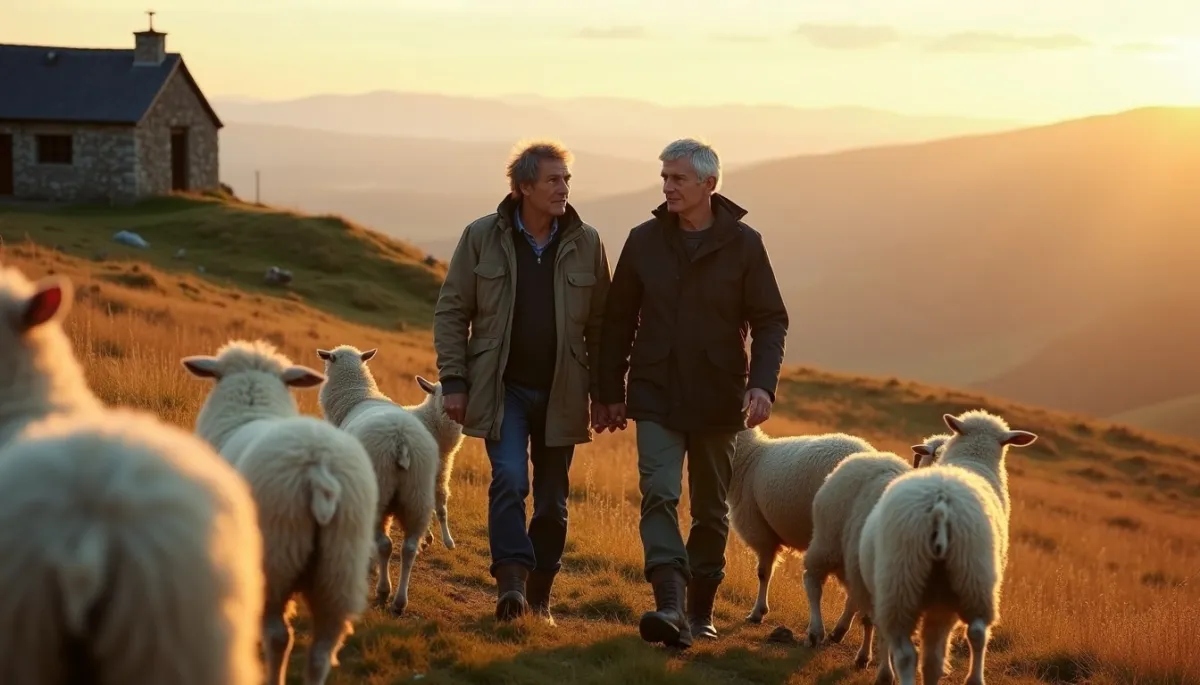
He left the newsroom at dawn. Under a pale sky he counts sheep, not headlines, and measures time by grazing, not by the clock.
The scene is concrete: a high plateau at 1 200 meters, a simple stone hut, a small vegetable patch, and two dozen Mérinos moving slowly across a wind-cleared slope. The phone rings rarely. When it does, the shepherd answers with a short message. Nearby, a faded notebook holds notes written during a past life covering protests, wars, and parliamentary sittings. That notebook, now stained with rain, is a trace of the profession that led him here.
Nous qui partons
Some well-known writers and reporters have embodied this shift. Sylvain Tesson, French travel writer and chronicler, lived six months alone on the shore of Lake Baikal in 2010, a solitude recounted in Dans les forêts de Sibérie (2011). His trajectory illustrates a modern curiosity for withdrawal rather than simple escape.
Across the Channel, James Rebanks is a different reference: born into a shepherding family in the Lake District, he studied at Oxford and later wrote The Shepherd's Life (2015), a bestseller that revalorized pastoral know-how. Although Rebanks did not start as a reporter, his voice reached many journalists and inspired professionals tired of urban pressure.
Beyond famous names, there are countless lesser-known transitions: correspondents who step back after traumatic coverage, magazine editors who buy small holdings in rural Spain or in the Cévennes, and broadcast journalists who take up transhumance projects for a seasonal reset. Each story is different, but patterns emerge: the search for daily meaning, bodily work, and clearer boundaries between life and labor.
Fils et racines
Why such radical moves? For many, the choice follows burnout or disillusionment with the media ecosystem. Years of 24/7 coverage, precarious contracts, and exposure to violence can erode physical and mental resources. The countryside offers a slower tempo and a different measure of value.
Other motives are literary and existential. Reporters accustomed to listening to other lives often crave the intimacy of tending animals and landscapes. Sylvain Tesson has often spoken of solitude as a method: a way to sharpen perception and to write from a different place. For some, shepherding is a form of research, a lived experiment that nourishes new narratives.
Practical triggers also exist: during the 2010s, rising interest for local food, ecological grazing and land restoration created new openings. Rural associations, small-holder networks, and programs from Chambre d'agriculture provide training and mentorship. In short, modern pastoralism can be both an ethical choice and a viable occupation, when approached with realistic planning.
Les angles morts
Yet the transformation is not without contradictions. Solitude can be romanticized. The reality includes long, cold nights, physical fatigue, unpredictable markets, and the need for veterinary skills. The pastoral life does not erase financial constraints; many new shepherds combine part-time remote work, agritourism, or artisanal production to stabilize income.
There are also legal and administrative obstacles. Access to communal pastures, seasonal permits, and livestock identification are concrete bureaucratic challenges. Prospective shepherds must learn local rules on transhumance, shepherding seasons, and subsidy systems, which vary widely from one territory to another.
Finally, the move raises questions about community and identity. Some former reporters find the solitude restorative for a time, then develop cooperative projects: shepherding collectives, writer-in-residence exchanges, or local radio shows about pastoral life. The lesson is clear: radical choices are often iterative. Solitude can be both refuge and laboratory for reinventing social ties.
For practical steps: try a short internship (two weeks to a season) at an operating farm; follow basic agricultural training such as a CAP agricole or a BPREA; connect with local Chambers of Agriculture and shepherd networks; and plan finances for at least the first two years.
This is not an exodus. It is a deliberate recalibration, where the horizon matters more than the breaking news. For those who make it, living with flocks is a daily education in patience, listening, and time.
Thanks for reading, and don't forget, Enjoy Life Moments!