From the Bronx to earth preservation: Laurent Baheux's photographic and spiritual journey
🚀 Key Takeaways
- Core concept : A visual journey that connects city life and wilderness.
- Practical tip : Photograph in black and white to emphasize shape and emotion; prioritize patience and respect for animals.
- Did you know : Using monochrome can make even a crowded scene feel timeless and sacred.
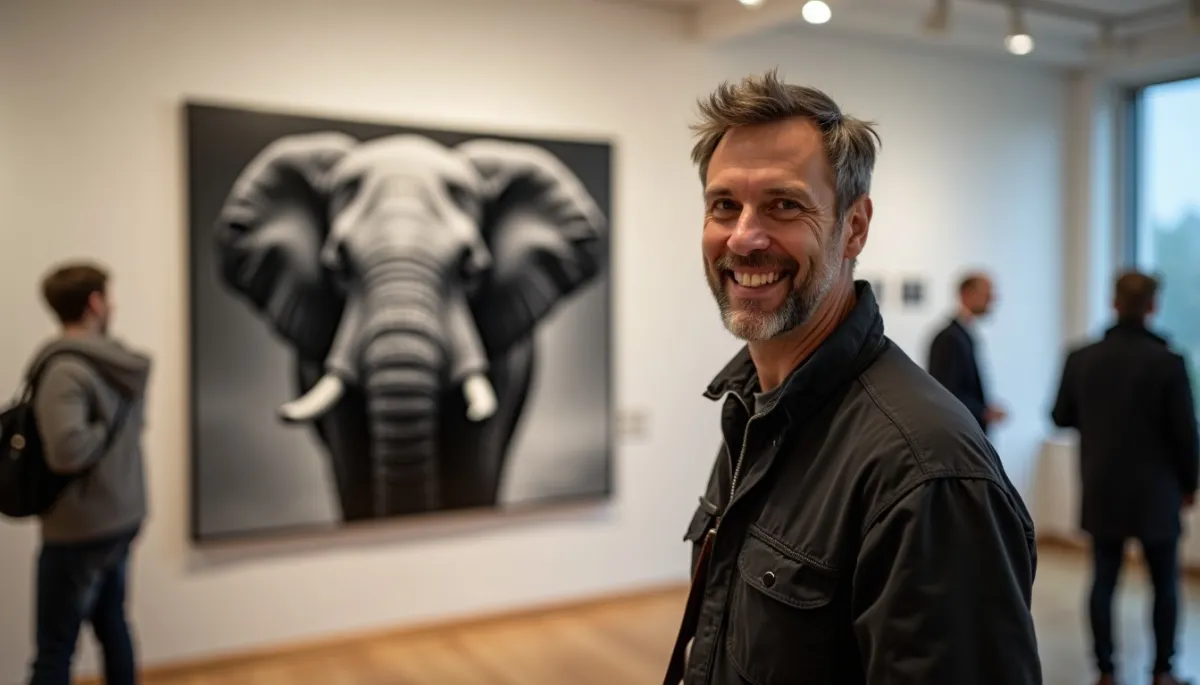
He stops you with one look. Imagine standing in front of a large print, black and white, an elephant filling the frame, the skin like weathered rock, eyes luminous. The room is quiet, the city noise far away. This is the power of an image that asks you to reconsider your place on Earth.
Une alliance sauvage
Laurent Baheux is a French photographer whose signature is stark monochrome portraits of wildlife. His images are recognized worldwide for their strong composition and emotional force, they hang in galleries and have been published in international outlets. Viewers often describe his work as cinematic, with each frame offering the gravitas of a portrait studio applied to animals.
While many know him for images of African mammals, his practice is broader. He frames predators and grazers, storms and quiet moments, always seeking the human story in animal presence. The result is a visual language where texture, light and contrast carry meaning beyond the literal.
Exhibitions of his work have brought conservation conversations into urban museums, creating encounters where city dwellers meet endangered landscapes. These shows turn images into tools, moving some viewers from admiration to concrete action, whether donations, advocacy or lifestyle changes.
Origines et métamorphoses
Baheux's path did not begin in the savannah. He spent formative years immersed in urban photography, including a period in New York's Bronx, where the raw energy of the streets taught him to read light and character quickly. Those early encounters with human resilience shaped his later approach to animals, treating them as subjects with personality rather than objects to be catalogued.
Over two decades, he moved from reportage to wildlife, choosing black and white as a deliberate aesthetic. Monochrome removes distraction, it compresses time and highlights form. Influenced by documentary traditions and a desire to communicate urgency, he adopted a visual austerity that amplifies emotion and clarifies message.
Along the way, Baheux forged relationships with local guides, rangers and communities across Africa and beyond. These collaborations deepened his understanding of ecosystems and the socio-economic pressures that threaten them. Photography became for him both vocation and tool for advocacy, a way to translate field experience into public empathy.
Tensions et horizon
The story is not without contradictions. The travel required to capture remote images contributes to carbon footprints, and the circulation of luxury art can feel distant from frontline conservation work. Baheux has navigated these tensions by partnering with local initiatives, by using sales and visibility to support protection projects, and by encouraging responsible tourism practices.
Looking ahead, his work points toward a hybrid role for the image-maker: artist, witness and messenger. He experiments with formats, from large prints to intimate books, always aiming to transform aesthetic encounter into commitment. The goal is clear, images must move people to protect lives and places that cannot speak for themselves.
For aspiring photographers who want to combine art and purpose, there are practical lessons in his trajectory. Travel light, learn basic local language, invest time in relationships with communities and guides, and prioritize the welfare of animals. Technically, favor longer lenses for distance, shoot in RAW, and consider black and white in post-production to emphasize structure and mood.
Thanks for reading, and don't forget, Enjoy Life Moments!