Custom cleats: where artisan craft meets high-performance engineering
🚀 Key Takeaways
- Core idea : Bespoke cleats combine artisanal finishing and digital biomechanics.
- Practical tip : Start with a 3D foot scan and a playing-surface consultation.
- Did you know : Mountaineering makers and football ateliers increasingly share materials and testing methods.
Feel the leather. Imagine a craftsman hand-shaping a last, then an engineer adjusting a carbon plate to the millimeter.
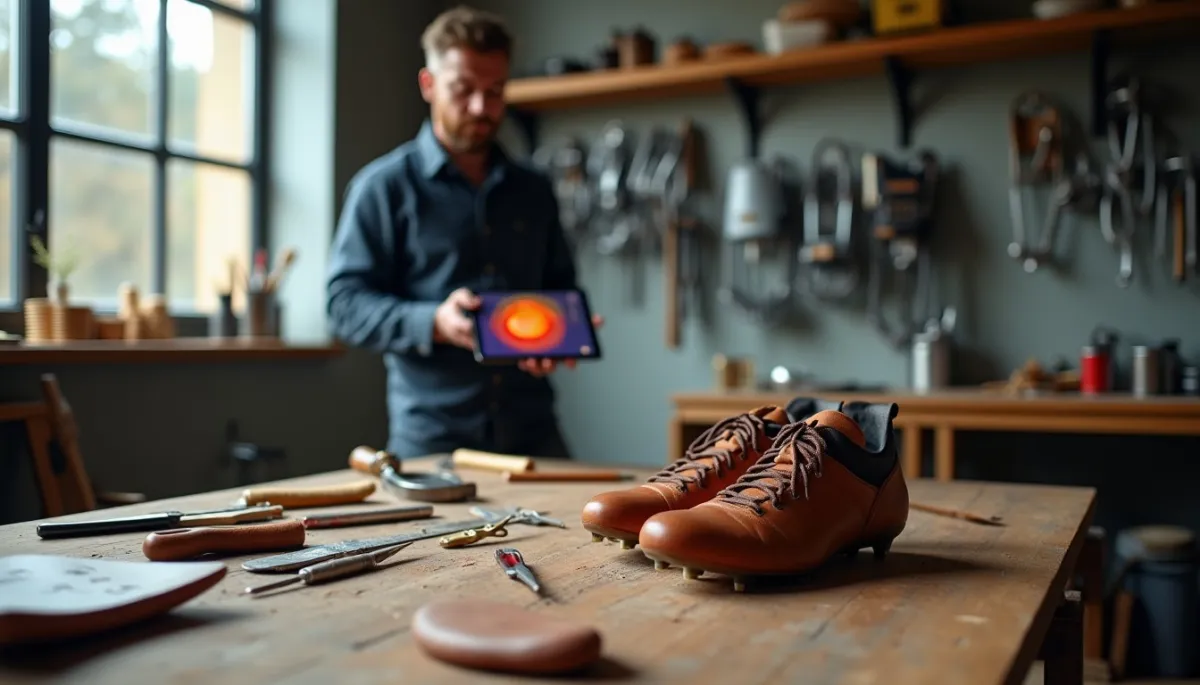
On a damp training pitch or at a climbing base camp, the same question is asked: how can a shoe become an extension of the athlete? Today the answer often comes from an unlikely alliance, a small atelier next to a biomechanics lab. You can picture a bench cluttered with awls and hammers, and, across the room, a pressure map glowing on a laptop. The scene encapsulates a shift: cleats are being reinvented from the sole up, combining centuries-old know-how and modern performance science.
Surfaces et usages
Performance drives customization. Football, rugby, trail running and mountaineering require different studs, plates and materials. A football pitch asks for molded studs on soft ground, while a steep alpine ridge demands crampons that lock into a boot.
Brands and small ateliers respond with specific geometries and materials. Pebax and carbon fiber plates shape energy return, while studs vary in length, conicity and placement to manage traction and release.
Examples are now tangible. Historic alpine makers have long perfected crampon attachments, while sports brands develop lightweight plates and bespoke fittings for elite athletes. The cross-pollination produces equipment that is both precise and personal.
À l'atelier et au laboratoire
The motives behind bespoke cleats are technical and human. On the technical side, 3D foot scanning, pressure mapping and gait analysis create data profiles. Those profiles inform last shaping, sole stiffness and stud layout.
On the human side, artisans translate numbers into feel. A leatherworker will select grain and stitching to control flex, while an engineer will tune a carbon insert to guide propulsion. The result is calibrated comfort and function.
Recent advances amplify this work. Additive manufacturing and localized reinforcement allow makers to experiment with lattice structures and variable stiffness. What was once impossible to shape by hand is now printable and still finished by artisans.
Deux mondes, une route
Contradictions remain. Bespoke cleats cost time and money. Mass brands offer good performance at scale, and regulators in football and athletics scrutinize anything that materially alters play.
Yet the future looks hybrid. Clubs and pro athletes increasingly request individualized plates and custom lasts, while luxury ateliers use performance tech to serve discerning clients who want both style and function.
Practical advice: if you consider bespoke cleats, get a proper foot and surface assessment, agree on break-in expectations, and ask about maintenance. A good maker will supply a usage profile, repair options and clear warranty terms.
Thanks for reading, and don't forget, Enjoy Life Moments!