Jane Birkin and Serge Gainsbourg: the bohemian love that reshaped French culture
🚀 Key Takeaways
- Key concept : An unconventional artistic partnership that blurred love, provocation and creativity.
- Practical tip : Visit 5 bis, rue de Verneuil in Paris to feel the ghost of their era.
- Did you know : "Je t'aime... moi non plus" was first recorded with Brigitte Bardot in 1967 and then with Jane in 1969, topping charts and shocking institutions.
They made scandal beautiful.
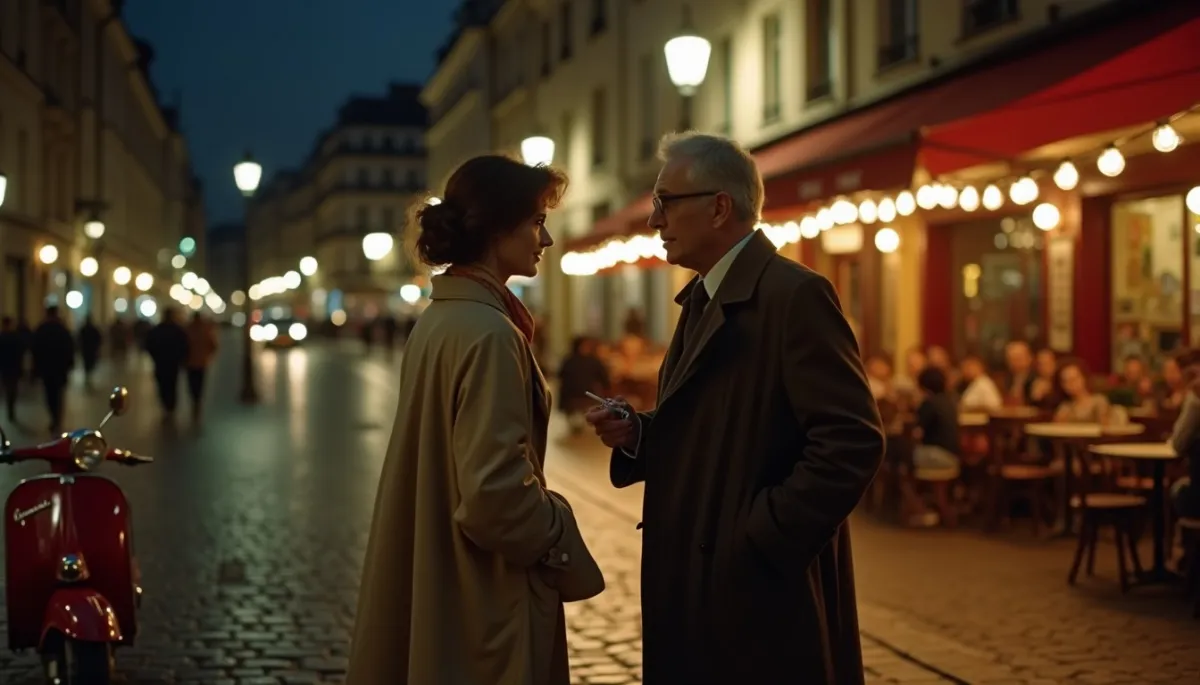
Picture a foggy Paris night in 1968, a film set lit by sodium lamps, actors smoking between takes. Jane Birkin, young, English, with a distinctive breathy voice and a relaxed wardrobe, walks past Serge Gainsbourg, older, ironic, cigarette in hand. The camera waits, the city hums, and an unexpected partnership begins to rewrite songs and style.
Visages connus
Serge Gainsbourg, born Lucien Ginsburg in 1928, was already a towering figure of French chanson. Composer, poet, provocateur, he built a career from the 1950s with songs like "La Javanaise" (1963), and then pushed boundaries with the 1971 album "Histoire de Melody Nelson," considered a landmark of modern French music.
Jane Birkin, born in 1946 in London, arrived in France as an actress and model. She gained public attention in late 1960s cinema and quickly became a presence: an accent, a laugh, a look. Her collaboration with Gainsbourg turned her into a singer and a style icon, quietly changing fashion and female expression.
Together they created work that still circulates in playlists and cafés. The 1969 release of "Je t'aime... moi non plus," recorded with Jane, shocked the Vatican and was banned by some broadcasters. Yet it reached the public, crossing borders and topping charts in several countries.
Rencontres et ruptures
Their meeting was filmed history. They met in 1968 on the set of the film Slogan, directed by Pierre Grimblat. The couple's relationship soon became public, intense, and visible. In 1969 their duet amplified a climate of scandal and fascination.
Charlotte Gainsbourg was born on July 21, 1971. The arrival of their daughter added a private layer to an otherwise very public romance. Charlotte later became a celebrated actress and singer, a living continuation of that artistic line.
Paris was their stage. They lived in Saint-Germain-des-Prés and especially at 5 bis, rue de Verneuil, where Serge settled; the address remains a pilgrimage point for fans. Their flat, their walks along the Seine, their appearances at Les Deux Magots and other cafés fed the myth of a bohemian couple at the center of French cultural life.
Yet their life was not only glamour. There were fights, jealousies, addictions, and contradictions. Gainsbourg's provocative acts, his constant smoking and drinking, collided with Birkin's quieter, more resilient temperament. The relationship lasted through the 1970s but frayed by the early 1980s; they separated formally in 1980s, though the exact rhythm of their detachment was as complex as their life together.
Contradictions créatives
Gainsbourg was a provocateur whose methods often courted scandal intentionally. He used shock as a tool, to question taboos in music and public morality. "Je t'aime... moi non plus" is an example: a song of erotic ambiguity that media and institutions attacked, while millions listened and debated.
Birkin embodied a different kind of revolution. Her style — casual silk scarfs, loose hair, an anti-glamour that became glamorous — influenced fashion. The famous Hermès Birkin bag (created in 1984 after a meeting between Jane Birkin and Hermès executive Jean-Louis Dumas) is a peculiar offshoot: an accessory that turned intimacy into luxury, and that remains a cultural signifier tied to her name.
The couple's contradictions fed art. Gainsbourg's music grew darker, more nuanced; Birkin's voice added vulnerability and distance. Their personal tensions were transmuted into songs, interviews, and performances that continued to provoke and inspire long after their separation and, for Gainsbourg, after his death on March 2, 1991.
Que retenir
Their story is a lesson about how public romance can become cultural currency. They did not merely live together; they produced a body of work and a set of images that influenced film, music, and fashion across Europe and beyond.
If you want to deepen your knowledge, listen to "Je t'aime... moi non plus" (1969), then to "Histoire de Melody Nelson" (1971), and watch the film Slogan (1969). Walk along rue de Verneuil in Paris, and imagine the cigarette smoke and the piano. Bring curiosity and respect when visiting sites that are also private memories.
For creators and lovers of culture, their legacy is an invitation: mix audacity with tenderness, risk with care, and remember that behind every myth there are real people, with flaws and generosity.
Thanks for reading, and don't forget, Enjoy Life Moments!