Biophilic design: bring nature into your office to boost creativity
🚀 Key Takeaways
- Core concept : Biophilic design reconnects people with nature to improve well being and creativity.
- Practical tip : Start with one large plant and a view, then add texture and natural materials.
- Did you know : The Amazon Spheres (opened 2018) are a corporate example of immersive greenery.
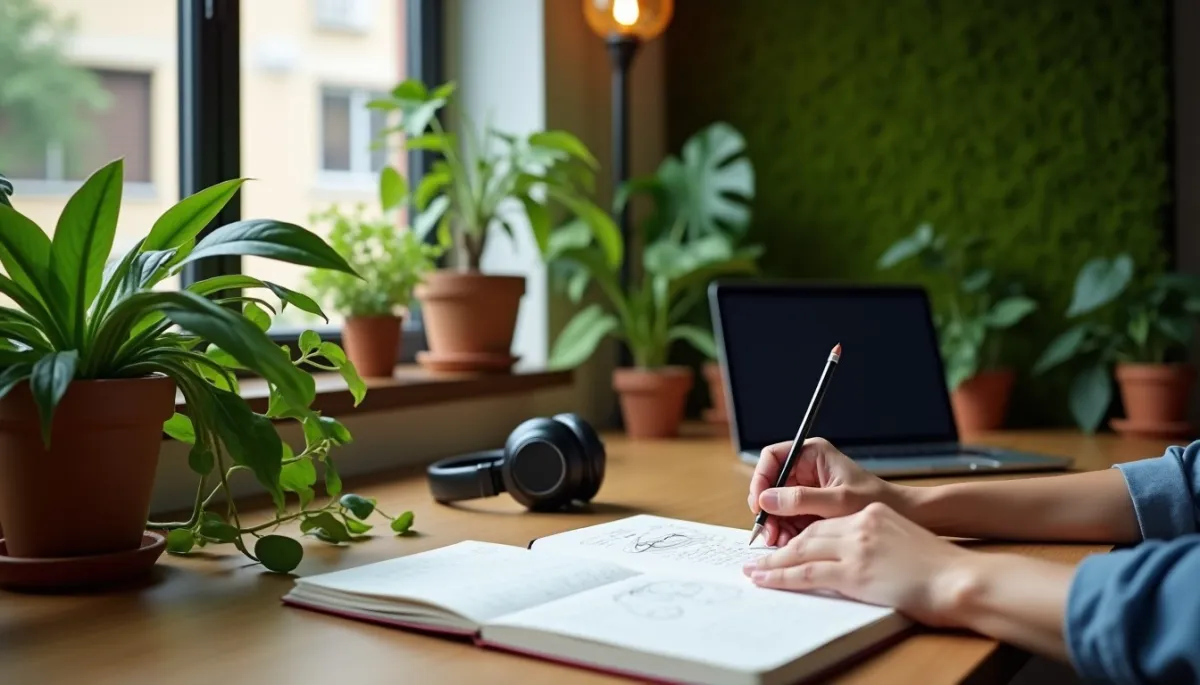
Imagine opening a laptop surrounded by leaves and warm light.
Sun filters through a ficus, a colleague sketches on kraft paper, and the soft sound of a small water bowl blends with distant city noise. The scene is calm, but ideas are flowing faster than usual. That is biophilic design in action: not decoration, but an invitation to think differently.
Vert et résultats
Biophilic design borrows from the biophilia hypothesis (E.O. Wilson, 1984), which suggests humans are innately drawn to nature. Applied to offices, the result is measurable. A widely cited 2014 study by researchers at the University of Exeter found productivity gains and improved well being when plants were introduced into workplaces.
The NASA clean air studies (late 1980s) also popularized the idea that certain plants reduce volatile organic compounds (VOCs), improving perceived air quality. More recently, companies such as Amazon built the Spheres in Seattle (opened 2018) to provide immersive green spaces for employees, a visible vote for nature at work.
Designing for creativity means more than adding pots. Natural light, views, materials with organic texture (wood, stone), living walls and water features (even a small fountain) change cognitive load and mood. These elements can increase divergent thinking, the kind of thinking that generates novel ideas.
Pourquoi ça marche
The brain responds to fractal patterns, soft edges and natural rhythms. These visual cues lower stress hormones and free cognitive resources for creative tasks. Neuroscience and environmental psychology show consistent links between exposure to nature and improved attention restoration (work first formalized in Attention Restoration Theory, 1995).
Practical workplace research since the 2000s demonstrates lower absenteeism, faster recovery after stress, and higher engagement in greener environments. Urban offices, where direct nature is scarce, can simulate these benefits through plants, imagery, and material choices.
Case studies matter. Singapore’s Jewel Changi (opened 2019) and numerous biophilic classrooms and hospitals show outcomes beyond aesthetics: people report better mood and concentration. For creative teams, these environments become laboratories for serendipity.
Designs et limites
Biophilic design is not a magic wand. It requires maintenance, water awareness and thoughtful species choice. Some offices test green schemes and abandon them because plants were neglected or placed without purpose.
There is also a risk of greenwashing, where greenery masks poor ergonomics or lighting. True biophilic design integrates multiple layers: light, air, acoustics, materials and sensory variety. Start small and iterate.
Simple, low-cost moves work well: choose resilient plants (pothos, snake plant, ZZ plant), add a natural-material desk surface, install a living shelf or a moss panel for low-maintenance texture. Track effects with short surveys and adjust.
For creative professionals, the invitation is clear. Build rituals around nature: a five-minute plant-watering break, walking meetings around a courtyard, or a weekly window-facing brainstorm. These rituals create the conditions where ideas grow.
Thanks for reading, and don't forget, Enjoy Life Moments!