The man who relearned to walk with the power of the mind: The story of Arthur Boorman
🚀 Key Takeaways
- Core concept : Motor relearning supported by mental focus and adaptive yoga.
- Practical tip : Start with micro-goals and consistent daily practice.
- Did you know : A viral video in 2012 documented Arthur Boorman's transformation and inspired millions.
Hope can arrive on a yoga mat.
Imagine a small community gym in Oklahoma, a man in his 50s standing with braces and crutches, his face lined by years of pain. Around him, an instructor gently guides him into poses adapted to his body. Cameras are rolling, but the scene is quiet, intimate. Breath by breath, he shifts weight, finds balance, and for the first time in a long while, his feet meet the floor without fear.
Small steps, big change
Arthur Boorman is an American veteran who spent years labeled as disabled and dependent on assistive devices. For decades he lived with chronic pain and dramatic weight gain, conditions that reinforced a cycle of immobility and medical pessimism.
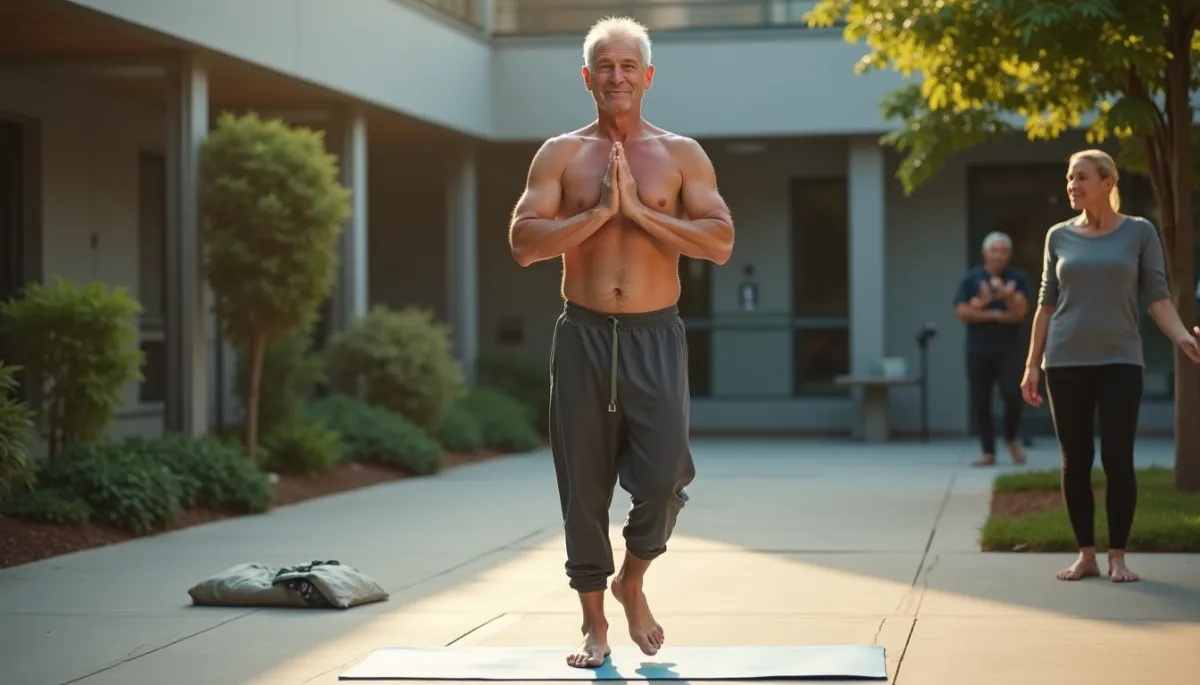
In 2012 a short documentary-style video circulated widely online, showing his progress over months of dedicated practice. Viewers saw an arc that felt cinematic: from walking with crutches to standing barefoot, then to light jogging. The clip became a modern parable about resilience.
What makes Arthur recognizable is less a public biography than the image of transformation. He became, for many, a symbol of what focused rehabilitation and belief can produce when combined with tailored physical practice.
The turn of the tide
The cause of this transformation was practical and psychological. Arthur began an adaptive yoga program tailored to his specific limitations. The program emphasized alignment, controlled movement, breath work, and progressive strengthening.
Two elements were decisive. First, consistency: the practice was daily and incremental, built around achievable micro-goals (standing for a few seconds, shifting weight, then holding a simple pose). Second, the mental work: visualization and the reframing of pain from an identity to a symptom to be managed.
From a neuroscientific point of view, this taps into neuroplasticity, the brain's ability to reorganize pathways through repeated stimulation. In practical terms, relearning to walk is less about a single miracle and more about tiny neural and muscular adjustments repeated over time.
Contradictions and limits
Arthur's story is inspiring, but it also invites nuance. A viral video compresses months of work into minutes, and the visible miracle can overshadow the medical support behind it: clinicians' assessments, adaptive equipment, and safety precautions.
Not every case will mirror Arthur's. Complex injuries, medical comorbidities and access to qualified coaches influence outcomes. Recovery is not a universal promise, but a set of possibilities that increase with appropriate guidance and perseverance.
Yet the contradiction is productive. The dramatic before/after challenges deterministic medical verdicts and reminds practitioners that hope, when paired with evidence-based practice, can expand the range of what is possible.
Practical lessons
If Arthur's journey speaks to you, begin with simple, safe steps. Consult a physician or physiotherapist before starting, and seek instructors experienced in adaptive movement or therapeutic yoga.
Use micro-goals: sit to stand ten times, balance on one leg for ten seconds, walk three steps without assistive devices. Pair movement with breath and mental rehearsal: before attempting a movement, close your eyes for 30 seconds and visualize each phase.
Keep a short log. Small measurable wins (seconds standing, steps walked) are powerful motivators and help clinicians tailor progressions. Above all, cultivate patience: neural and muscular changes accumulate slowly, but they do accumulate.
Thanks for reading, and don't forget, Enjoy Life Moments!