Richard Mille: hyper-watchmaking or how to put a Formula 1 engine on your wrist
🚀 Key Takeaways
- Core concept : Richard Mille applies motorsport and aerospace engineering to watchmaking.
- Practical tip : Try on a tonneau-shaped case and check weight; some tourbillons weigh under 20 grams.
- Did you know : The brand produces only a few thousand pieces per year, making each reference highly collectible.
Pure adrenaline on the wrist.
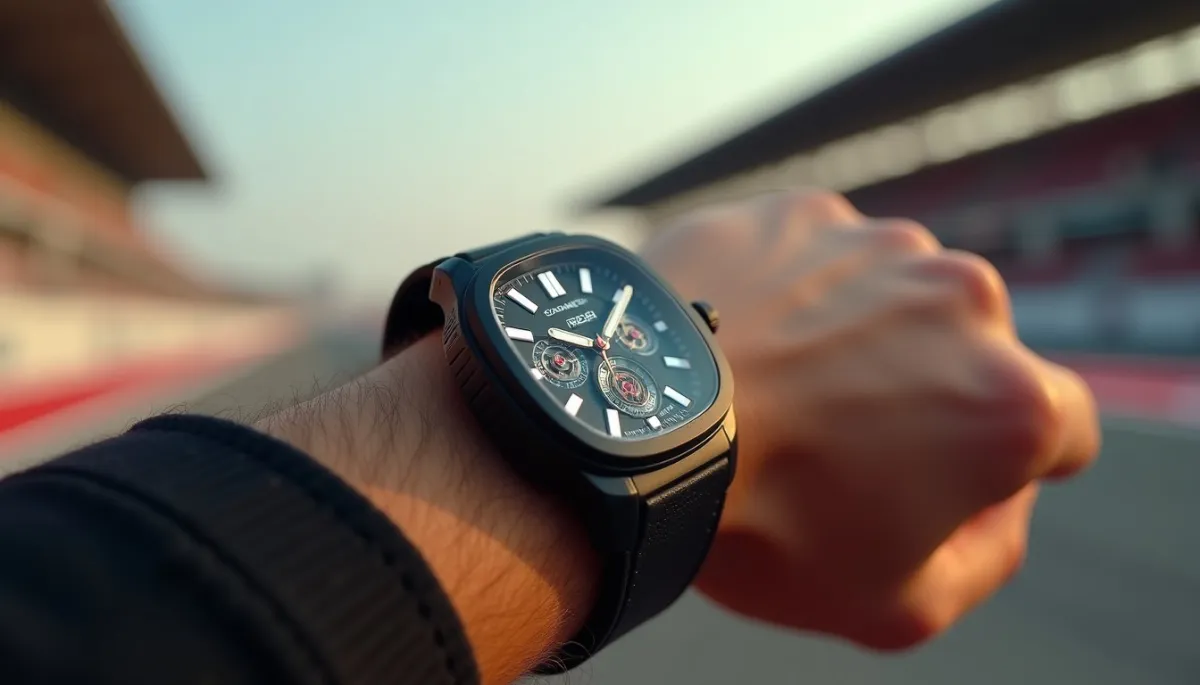
Imagine the paddock at Monaco, the smell of hot rubber and carbon, engineers huddled over telemetry. Now shrink that universe and place it on a wrist: skeleton bridges like suspension arms, carbon TPT cases that echo composite monocoques, and tourbillons designed to resist shocks. That is the spectacle a Richard Mille watch delivers in boutiques from Geneva to Dubai.
mécanique spectaculaire
From its launch around 1999, Richard Mille (the man and the maison) set out to break the rules of traditional haute horlogerie. The watches are instantly recognisable by their tonneau shape and fully skeletonised movements, presented like miniature engines.
Technical showmanship is not mere decoration. Tourbillons, chronographs and complex complications are engineered with extreme lightness and shock resistance in mind. The partnership with athletes such as Rafael Nadal produced tourbillon pieces that can be worn during intense physical activity, a radical idea a generation ago.
The consequence is a new vocabulary in watchmaking: hyper-horlogerie. It borrows from motorsport the obsession for weight saving, performance margins and visible mechanics. Prices follow: entry-level pieces start in the tens of thousands of euros, while special editions and sapphire-cased masterpieces sell for hundreds of thousands to several million.
matériaux d'avion
What sets Richard Mille apart is material science. Carbon TPT (thin ply technology), quartz TPT, grade 5 titanium and ceramic appear in cases and movement parts. These materials come from aerospace and composite engineering, chosen for stiffness, lightness and a distinct aesthetic.
Using such materials requires rethinking production. Cases are milled with tight tolerances, movements are skeletonised to reduce mass, and finishes are technical rather than classical. This is why the brand collaborates with specialists outside traditional watchmaking, including firms from motorsport and aviation.
This cross-pollination also explains the brand's limited volumes. Producing a Carbon TPT case or a sapphire monobloc is time consuming and costly. Richard Mille deliberately keeps output small, typically a few thousand watches per year, which fuels collector demand and strong secondary-market prices.
cadence et tensions
Not everything is seamless. The strategy raises contradictions. By marrying high-tech engineering and extreme price points, the brand polarises the market: purists critique the flamboyance, collectors laud the innovation. Yet the commercial success is undeniable, with record-breaking auction results for certain references.
There are also operational challenges. After-sales service for complex, highly customised movements demands highly skilled watchmakers and long lead times. Prospective buyers should consider maintenance, warranty and insurance when investing in a Richard Mille.
Looking forward, the brand's path seems to be further technical audacity. Expect more experiments in materials (new composites, ceramics), and collaborations that blur the line between racing prototypes and wrist instruments. For anyone curious, the best approach is experiential: handle the watch, feel its weight, and understand that you are buying a philosophy as much as a timekeeper.
Practical advice: try models in person to judge ergonomics, prioritise authorised dealers, and insure high-value pieces. For conversational currency, recall the Rafael Nadal anecdote: his ultra-light tourbillon watches, designed to be worn during matches, became emblematic of Richard Mille’s philosophy, showing that performance and luxury can coexist.
Thanks for reading, and don't forget, Enjoy Life Moments!